

Code of Concepts
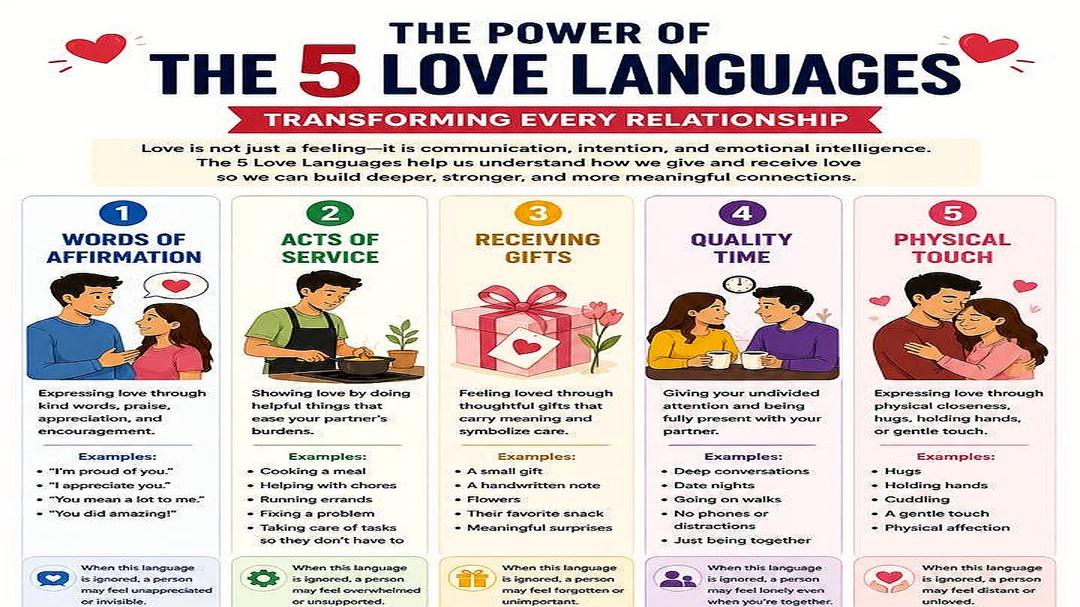
5 Love Languages: Improve Relational Bonds through Words of Affirmation: Verbalizing appreciation, compliments, and gratitude acts as essential emotional sustenance, ensuring partners feel seen and deeply valued.
Prioritize Emotional Support via Acts of Service: Alleviating a partner’s daily burdens through intentional, supportive behaviors communicates care and dedication more effectively than words alone.
Symbolize Connection through Receiving Gifts: Treating gift-giving as a tangible expression of thoughtfulness and presence strengthens the emotional bond, proving that the partner is constantly held in mind.
Foster Intimacy through Quality Time: Dedicating undivided, distraction-free attention creates a secure emotional environment that allows for deeper understanding and shared experiences.
Establish Security through Physical Touch: Utilizing physical closeness such as holding hands or hugging provides a vital, non-verbal sense of comfort and belonging that sustains the emotional connection.
Introduction
The 5 Love Languages illustrate one of the most powerful systems for creating profound, significant, and emotionally resilient connections. Regardless of whether it pertains to marriage, dating, friendships, or familial relationships, grasping The 5 Love Languages can profoundly transform how people comprehend and engage with each other. Numerous relationships break down not from a deficiency of love, but because partners demonstrate that love in varied manners. By understanding The 5 Love Languages, you come to see that love transcends mere emotion; it encompasses communication, purpose, and emotional awareness.
1. Words of Affirmation
This love language emphasizes showing affection by using verbal compliments, gratitude, and support. Individuals who prefer this language feel greatly appreciated when they encounter expressions such as:
“I take pride in you.”
“I value all that you do.”
“You mean so much to me.”
To them, words serve as emotional sustenance. One genuine compliment has the power to enhance their whole day. When this language goes unrecognized, an individual might feel unseen or undervalued, regardless of the strength in other aspects of the relationship.
2. Acts of Service
This form of communication is conveyed through supportive behaviors that alleviate the weight of a partner’s duties. Preparing a meal, assisting with tasks, or addressing minor issues are strong demonstrations of affection for a person who has this primary language. Their heart listens: “I care for you; therefore, I wish to help you.” If this language is not comprehended, the person might feel inundated and neglected.

3. Receiving Gifts
This specific aspect of The 5 Love Languages is often misunderstood as materialism. Nonetheless, it genuinely concerns the consideration and the emotion that accompany the act. A tiny blossom, a personal message, or a preferred treat can make the receiver feel profoundly acknowledged. For them, a present symbolizes thoughtfulness, concern, and emotional connection.

4. Quality Time
This language is about giving someone your undivided attention. It means being fully present—no phones, no distractions, and no rushing. Deep conversations, shared walks, or simply sitting together in silence can create a powerful emotional bond. People who value Quality Time feel most loved when they are prioritized.
5. Physical Touch
This love language is rooted in physical closeness hugging, holding hands, or a gentle, affectionate touch. For these individuals, touch is a direct emotional connection that provides comfort, security, and a sense of belonging. Without it, they may feel distant or unloved, regardless of how many kind words are spoken.
Why Understanding The 5 Love Languages Matters The essence of The 5 Love Languages lies in its ability to inspire us to love others deliberately. Love transforms into a decision and an act instead of merely a feeling. For instance, one partner may show affection through Acts of Service, whereas the other requires Words of Affirmation. They care for one another, yet they communicate in distinct “emotional dialects.”
By understanding how to communicate in your partner’s unique language within The 5 Love Languages model, you establish:
Emotional safety and confidence.
A more robust, resilient connection.
Improved communication and shared understanding.
A route to mending past hurts and restoring fractured trust.
Comprehending Yourself
Examining The 5 Love Languages also aids people in recognizing their own desires. Numerous individuals mature without fully understanding how they prefer to be loved. Recognizing your main language clarifies your emotional needs, enhancing self-assurance and emotional growth.
Final Thoughts
In the end, the 5 Love Languages teach us that love isn’t a “one size fits all” idea. It is distinctive, personal, and profoundly human. Learning the proper language of our beloved makes the bond easier, more profound, and genuinely satisfying.
About the Author
ABDISALAN EGAL
Mental Health & Counseling Expert